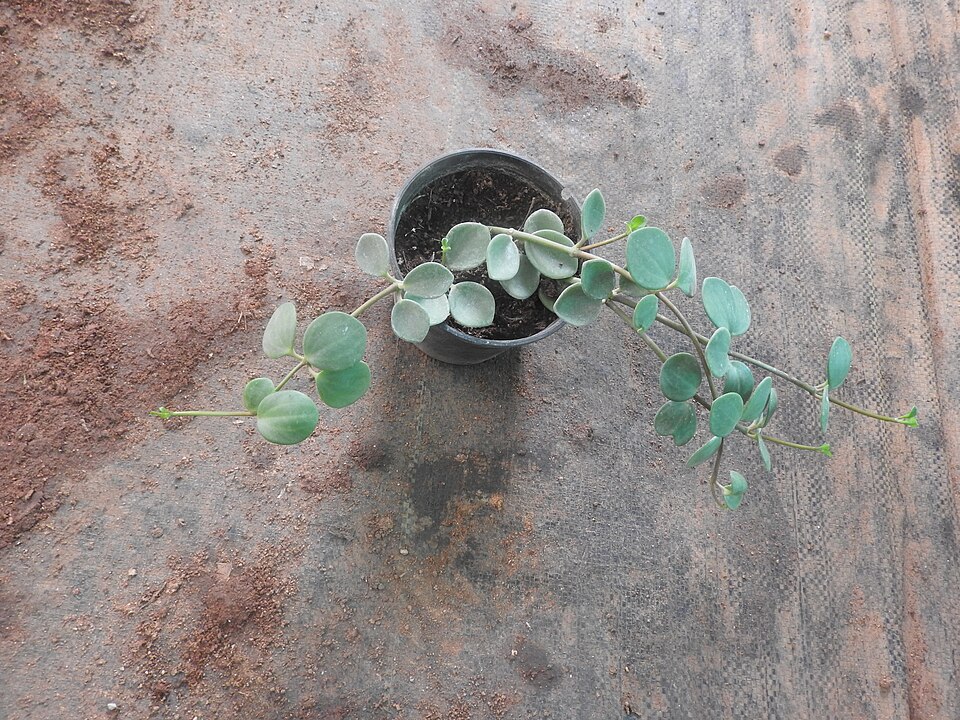
Peperomia Hope Peperomia tetraphylla 'Hope'
Peperomia Hope (Peperomia tetraphylla 'Hope') likes bright indirect light. Water every 10 days, every 18 days in winter (November to February). Let it dry between waterings. Trailing and semi-succulent; easy to propagate.
At a glance
| Scientific name | Peperomia tetraphylla 'Hope' |
|---|---|
| Light | Bright indirect light |
| Water | Let it dry between waterings |
| Water | every 10 days, every 18 days in winter (November to February) |
| Repot | every 730 days |
| Feed | every 45 days, from April to September |
| Growth time | 2–3 months |
| Group | Peperomias & small foliage |
Care step by step
How to look after Peperomia Hope, task by task: how often, how to do it, the signs it needs it and one thing to avoid.
Water
How often: every 10 days, every 18 days in winter (November to February)
- Feel 2–3 cm down into what it grows in (or lift it: light means dry). Water only when it is dry.
- Water slowly all over until a little runs out of the bottom (a kokedama or a mounted plant: soak it for 10 minutes).
- Let it drain and empty the saucer after 15 minutes, so the roots never sit in water.
Signs it needs it: The top is dry and lighter in colour. The pot feels light when you lift it. Leaves droop a little and perk up after watering.
Avoid: Watering on a schedule while it is still wet: soggy roots rot.
Water · In moss or perlite
- Squeeze a pinch of the moss: it should feel like a wrung-out sponge.
- Water gently all over until it is evenly moist.
- Let the extra drain away; never leave it soggy.
Avoid: Letting it dry out completely: cuttings in moss need steady moisture.
Water · A kokedama or a mounted plant
- Lift it: a light ball or board means it is dry.
- Soak it in a bowl of room-temperature water for 10 minutes.
- Let it drip dry before you hang it back.
Avoid: Hanging it back dripping: it stains walls and rots the moss.
Water · An air plant
- Soak the whole plant in room-temperature water for 20–30 minutes.
- Shake it gently.
- Dry it upside down in bright light for a few hours.
Avoid: Putting it back wet: water left in its centre rots it.
Repot
How often: every 730 days
- Water the day before, so the root ball slides out whole.
- Ease it out, loosen circling roots, cut off any brown, mushy ones.
- Set it in a pot one size up (2–4 cm wider) on fresh mix, at the same depth.
- Fill around it, press lightly, water well.
Signs it needs it: Roots come out of the drainage holes or circle the pot. Water runs straight through, or the soil stays soggy and smells sour. It tips over or stopped growing in season.
Avoid: A pot much bigger than the roots: the extra soil stays wet.
Repot · In LECA or pon
- Lift it out and rinse the old balls off the roots.
- Trim any brown, soft roots with clean scissors.
- Set it in a pot one size up and fill around it with clean, rinsed balls.
- Top up the reservoir to its line.
Avoid: Mixing in soil: it stays wet and rots the roots.
Repot · From water to a first pot
- Wait for roots 3–5 cm long, with small side roots.
- Fill a small pot with moist, light mix.
- Make a hole, set the roots in without bending them, firm the mix around.
- Keep it moist for the first week: its roots are used to water.
Avoid: A big pot for a first pot: a small one dries out evenly.
Repot · In moss or perlite
- Ease it out and tease the old moss or perlite from the roots.
- Choose: fresh moss or perlite, or soil if it is well rooted.
- Set it in a pot one size up and fill around it.
- Water it in and keep it out of strong sun for a few days.
Avoid: Packing the moss tight: the roots need air.
Repot · A kokedama: rewrap
- Soak the ball for 10 minutes, then unwind the string.
- Peel off the old moss and keep the root ball whole.
- Add a layer of fresh soil and wrap it in fresh moss, a size bigger.
- Tie it round with string, criss-cross, and soak it again.
Avoid: Wrapping it too tight: water cannot soak in.
Feed
How often: every 45 days, from April to September
- Water first if it is dry: never feed a thirsty plant.
- Mix the fertiliser at half the strength on the bottle.
- Water it in like a normal watering.
Signs it needs it: Spring and summer, while it puts out new growth. Pale new leaves or slow growth. It has been in the same medium for months.
Avoid: Feeding in winter or right after a repot: a fresh mix has food already.
Feed · In LECA or pon
- Use a nutrient made for hydro or semi-hydro.
- Mix it into the water at the strength on the label.
- Top up the reservoir with it, up to its line.
Avoid: Ordinary soil fertiliser: it builds a crust on the balls.
Feed · A cutting in water
- A cutting needs almost nothing: skip it until it roots.
- Once it has roots, add one drop of liquid fertiliser to the glass.
- Change the water as usual next time.
Avoid: A full dose in a glass: it burns the new roots.
Feed · Kokedama, mounted and air plants
- Mix the fertiliser at a quarter of the strength on the bottle.
- Mist it over the leaves (or add it to the soaking water).
- Do it in the morning, so the leaves dry by evening.
Avoid: A full-strength dose: leaves take it in fast and burn.
Questions growers ask
How often should you water Peperomia Hope?
About every 10 days, every 18 days in winter (November to February). Let it dry between waterings.
How much light does Peperomia Hope need?
Bright indirect light.
When should you feed Peperomia Hope?
Feed every 45 days, from April to September.
What is the key care tip for Peperomia Hope?
Trailing and semi-succulent; easy to propagate.
About this plant
Small, round, thick leaves set in whorls along trailing stems, like strings of green coins. Peperomia Hope is a hybrid from a genus native to the tropical Americas, and peperomias belong to the same family as black pepper, which is where the name comes from. Its semi-succulent leaves store water, so it forgives a missed watering far better than overwatering. A shallow pot and an airy mix with perlite keep the roots happy, and it suits a hanging basket or a shelf edge. Single leaves or short stem pieces root in moist mix or water. It is non-toxic to cats and dogs.
Varieties
- Standard
Also called: פפרומיה הופ
PlantXHub care guide · Last updated: